


 Print
PrintThe summer I knocked on doors for Gallup
In the summer of 1971, a 20-year-old college kid named David DeMay was paid $1.85 an hour plus 12 cents a mile to walk the poorest, roughest neighborhoods of Jackson, Michigan with a clipboard and a 90-minute Gallup questionnaire.
No cell phone. No recording device. Just a pencil, a stack of 14-page forms, and instructions to get quotas for black, low-income, and other specific demographic respondents.
He took to the road in his grandfather’s borrowed Oldsmobile and knocked on sometimes many doors before finding a surprised and apprehensive occupant. With a warm greeting, he’d ask if the person would be willing to answer a few questions.
What followed was a 60- to 90-minute interview, often on front porches or in living rooms, requiring him to hand-write verbatim responses onto giant paper questions. There was no laptop, no recording, and no digital skip logic; every answer had to be legible and fit the designated space.
This method relied on quota sampling, which meant poll takers — often young, white college males who were intentionally sent into the poorest, highest-crime, and most racially tense neighborhoods — had to meet specific demographic targets. Their assignment was dictated by the quotas (X number of black respondents, X number of low-income respondents, etc.), making the job inherently risky but critical to capturing a representative sample.
People answered in full paragraphs. Some invited him in for coffee. Some told him to get off the porch before they called someone who didn’t like white boys with clipboards. Every answer had to be written down verbatim, in real time, in the heat (no AC), while dogs barked and neighbors watched.
Sociologists still mine the 1971 Gallup surveys — not just for the numbers, but for the rich, unfiltered language contained within — the actual phrasing people used about Vietnam, busing, and “law and order”; the first measurable cracks in white liberal support of the Great Society; and the birth of the “silent majority” rhetoric captured in real voter language.
They belong to the last tiny club of foot soldiers of 20th-century polling.
Fast-forward to 2025. Today’s “polling” is a push-button online panel, a 4-minute survey, a loaded question (“Do you support bold change on affordability?”), and a crosstab sculpted to deliver tomorrow’s cable-news chyron.
One method required courage, stamina, and a tolerance for raw human reality. The other requires a consultant, a donor check, and a willingness to pretend the mirror is telling the truth.
What Changed
|
1971 |
2025 |
|
The pollster was sent into the real world to discover what people actually thought. |
The pollster is sent into a spreadsheet to manufacture what the client needs people to believe they think. |
|
Refusal rates were 50–70%, but the answers you got were unfiltered, face-to-face, often angry, often profound. |
Response rates are 1–3%, but the answers are pre-screened, pre-weighted, and prepackaged for maximum narrative impact. |
|
The kid with the clipboard had no idea what the national result would be. |
The client already knows what the national result will be before the first respondent clicks “submit.” |
The Final Inversion
In 1971, the pollster served the truth, even when the truth was ugly. In 2025, the truth serves the pollster, and if it refuses, it is simply edited out of the crosstabs.
David DeMay and thousands like him walked into neighborhoods most politicians wouldn’t drive through today, just to bring back an honest temperature reading. Today’s pollsters never leave the Zoom room. They just adjust the thermostat until the voter feels the temperature he’s told to feel.
That is the difference between polling and gaslighting. And the republic is a much colder place for it.
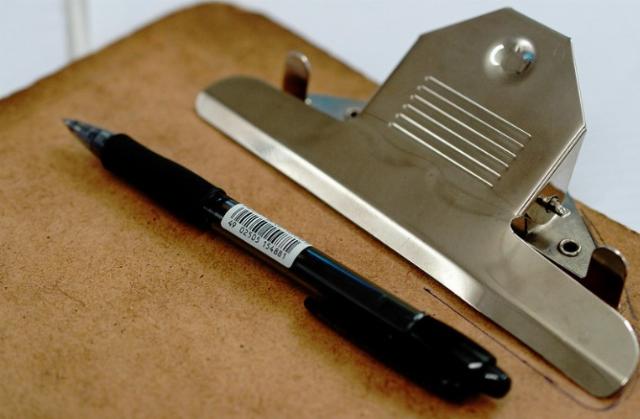
Image: Dave Crosby via Flickr, CC BY-SA 2.0.
FOLLOW US ON


