


 Print
PrintHow can we secure our children's future?
A reckoning always arrives—sometime between the reflexive commentary that accompanies every story and the historical record that later establishes what actually happened. At the end of 2025, I present a list of inconsistencies which, if left unaddressed, will inevitably lead to the end of the greatest economic and social experiment in human history. The question we will discuss afterward is how a society that once confronted these challenges lost its way, and was no longer able to make the hard choices required to survive. Our list includes, but is not limited to:
*Debt. It is both logically and historically evident that no nation can survive perpetual, unchecked borrowing. Yet we lack even the beginnings of a national consensus on how to address it. Despite an economy that repeatedly generates higher income, spending grows faster still, compounding risk for future generations.
*Immigration. Our problem spans two interrelated questions: does a sovereign nation have the right to secure its borders, and once people are here, what rules should govern their status? The current stalemate—most visible in sanctuary policies and uneven enforcement—undermines the rule of law and erodes public confidence.
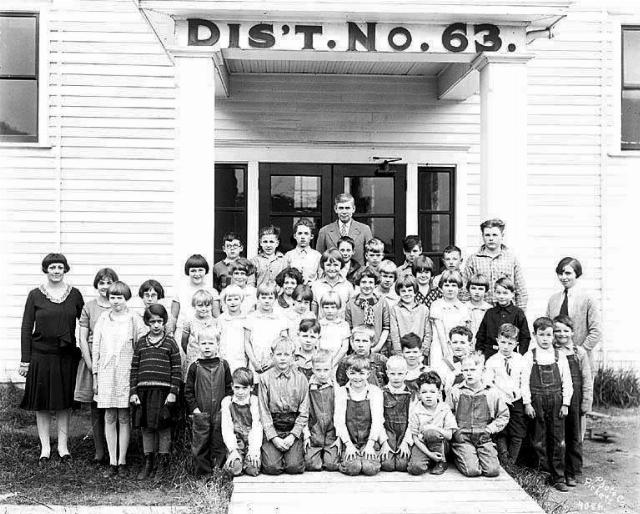
Graphic: School children at Index, October 1928 (PICKETT 711). Wikimedia Commons. Public Domain.
.jpg)
*Education. Around the world, developed and developing countries alike prioritize education, especially STEM instruction. The paradox in the United States is stark: we spend enough to educate twice as many children as we do, yet our outcomes lag far behind other nations.
*Leadership. We once expected public office to attract citizen-statesmen who would build on their predecessors’ work, guide institutions for the long term, then return to private life. Somewhere along the way we began electing for short-term gain rather than competence. Promises of immediate benefits have produced a system that rewards takers over makers and erodes the incentives for responsible governance. In the process, we have created a political class more akin to royalty than public servants.
*Economic fragility and inflation. The economy can appear robust while hiding structural weaknesses: rising inflation, volatile markets, and trade shocks can quickly erode living standards and political trust.
*Demographics and the aging population. An aging society raises long-term entitlement costs, shrinks the labor force and reduces dynamism—making it harder to remedy debt burdens and productivity shortfalls.
*Erosion of civic norms and the rule of law. When institutions charged with adjudicating disputes and enforcing rules are partisan or weak, citizens lose faith in peaceful mechanisms for change. That loss of legitimacy makes compromise more difficult and raises the stakes of every political contest.
We logically conclude that our present status is untenable. Given that, what is the path back to a sustainable economic and political system that amplifies the best our Founding Fathers intended and restrains our worst angels?
*End our debt economy. Encourage thrift and savings through government policy and action. Disincentivize renting vs. owning. Lower expectations for a starter 2,500 sq. ft., 3 bedroom, 2 ½ bath home on an acre of land, to what young people can reasonably afford, and subsidize home ownership.
*A hard line on immigration. Admit only people who can help our economy and forbid public assistance for immigrants. End birthright citizenship and raise the time you must be a legal resident from five years to ten before you can apply to become a citizen. Create a new assimilation standard that includes requirements for language, culture, and economic contribution, and automatic expulsion for criminal convictions. All elected office holders must be born here.
*The hardest change will be improving our national and local leadership. Our political party system collapsed when party leadership took the position that winning trumped each party’s ethical and moral principles and even its long-term survival. Witness the Democrat Party quickly morphing into a socialist party, no longer tethered to the original Democrat Party.
Behold the rise of the Uniparty as significant shares of Americans distrust both major parties or see them as ineffective.
It is here that we should make our stand, as politically active Americans can and should take back their local, state, and national party apparatuses, returning them to sanity with the single-minded view that we must first protect our Republic, and ensure a promising future for our children. If our representative republic doesn’t survive, little else matters.
Author, businessman, thinker and strategist. Read more about Allan, his background and his ideas to create a better tomorrow at www.1plus1equals2.com.
FOLLOW US ON


