


 Print
PrintWhen will the people see true accountability?
Without a doubt, everyday Americans are increasingly challenging the uneven hand of political accountability. They observe a system that appears to pursue accountability with an ironclad imbalance of justice, leaving one side largely untouched while the other bears the brunt of investigations and prosecutions. This sentiment has intensified in recent months as calls grow louder for action against figures long accused of overstepping boundaries. With the nation approaching the one-year mark of the current administration, questions arise about why certain high-profile cases remain dormant, fueling debates on whether rhetoric alone can bridge the gap to real reform.
The narrative of selective enforcement traces back through administrations, illustrating a pattern that critics label as the weaponization of federal agencies. During the Clinton era, the Internal Revenue Service and Federal Election Commission zeroed in on conservative entities like the Christian Coalition. Court records confirm that the FEC pursued cases against groups such as the Christian Action Network for communications deemed outside regulatory bounds, while the IRS revoked tax-exempt status from a New York church after it ran advertisements critical of Bill Clinton’s 1992 presidential bid. These actions set a precedent, demonstrating how regulatory bodies can stifle dissent under the guise of compliance.
This trend escalated under President Obama, when the IRS admitted to subjecting conservative organizations to undue scrutiny. In 2017 settlements, the agency issued apologies to groups like Linchpins of Liberty for aggressive audits and delays in tax-exempt approvals, actions that targeted Tea Party affiliates disproportionately. The scandal, exposed in 2013, revealed a deliberate effort to hinder political opposition, as confirmed by Treasury inspector general reports. Kimberley Strassel’s book The Intimidation Game chronicles these episodes, detailing how disclosure laws and regulatory harassment silenced free speech on the right, from IRS probes to broader chilling effects on conservative activism.
A poignant voice in this history belongs to Becky Gerritson, founder of the Wetumpka Tea Party in Alabama. In her 2013 testimony before Congress, Gerritson described the IRS’s invasive demands — bins of documents, personal information, and threats of audits — that crippled her group’s operations. She labeled the treatment “un-American,” a willful act of intimidation designed to suppress viewpoints. Her words, delivered with unyielding resolve, echoed the experiences of over 400 conservative groups denied tax-exempt status during 27 months, while progressive counterparts faced no such barriers. Gerritson’s speech served as a clarion call, one that many feel went unheeded, allowing the cycle of selective scrutiny to persist.
Fast-forward to today, October 2025, and the echoes resonate louder. Attorney General Pam Bondi, sworn in February 2025 as the 87th U.S. attorney general, entered office amid promises to restore impartiality to the Justice Department. Yet, nine months into her tenure, critics point to a lack of movement on several fronts. Bondi has issued memos on issues like DIE guidance for federal fund recipients and ending political violence against ICE agents, but broader accountability remains elusive. In recent Senate hearings, she clashed with Democrats over departmental priorities, defending her leadership while facing pointed questions on stalled probes.
Among the unresolved matters are allegations surrounding the January 6 committee. Reports highlight communications between Liz Cheney and witness Cassidy Hutchinson that bypassed legal protocols, alongside claims of withheld exculpatory evidence and document destruction. Similarly, the so-called Russia Hoax — detailed in a 2025 House Intelligence Committee report as a fabricated narrative — has seen no prosecutions despite evidence of orchestrated misinformation. Mortgage fraud accusations against prominent Democrats, including Federal Reserve figures like Lisa Cook, have surfaced, with documents challenging initial claims but underscoring the need for a thorough review.
More troubling are ties to Jeffrey Epstein’s network. Congressional pushes for file release have met resistance, with Democrats accusing the administration of cover-ups, even as records link figures across parties to the late financier’s activities. On immigration, evidence points to Democrats’ efforts to expand benefits for undocumented individuals, including health care provisions that critics argue aid evasion of ICE enforcement. Videos and reports document assaults on ICE facilities, often attributed to groups like Antifa, with incidents in Portland escalating to nightly sieges and physical attacks on agents.
These issues collectively paint a picture of inaction that erodes public trust. Supporters of robust enforcement argue that without a decisive shift — perhaps a new A.G. with unyielding determination — the window for justice closes. Three years pass quickly in Washington, and the absence of arrests in these areas stands in stark contrast to the aggressive pursuits of past administrations against their opponents.
Ultimately, the American public seeks equilibrium, where accountability transcends party lines. As debates rage, the path forward demands not just words, but deeds that reaffirm the principle that no one stands above the law. In this divided era, true progress hinges on bridging that divide with impartial resolve.
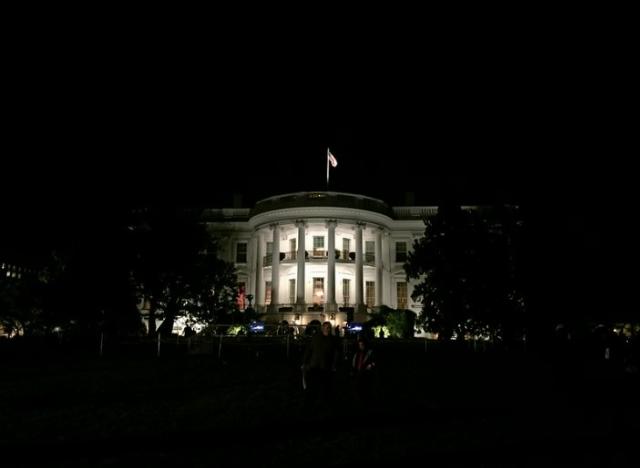
Image: NASA Goddard Space Flight Center via Flickr, CC BY 2.0 (cropped).
FOLLOW US ON


