



 Print
PrintOde to the people of Rome and their civility
Reflecting on the protests against tourism in Italy, Spain, and Portugal over the summer, I didn’t expect to feel particularly welcome in Rome. I was wrong. Romans are the kindest people of any city I’ve ever visited.
Last month, on a rainy evening after dusk, I walked past the Flaminio metro station near Piazza Del Popolo, where I noted a group of local young men in their late teens or early twenties congregated just outside the station. I was vigilant about petty theft there because my uncle had been pickpocketed a couple years back. With cautious eyes, I quickened my pace and increased the distance between myself and the young men. Then, an elderly woman visiting from Cyprus slipped on the wet cobblestones, and those men sprinted to her aid. Their humanity and consideration clearly extended to tourists.
The next day, as torrential rain continued to pound the eternal city, I took refuge with a group of tourists under a roof in a narrow alley near the Fontana Di Trevi. After entering, I noticed a sign that read, “Private Property.” The alley led to a beautiful courtyard that was guarded by a security guard. Instead of shooing us away -- which was entirely his right to do -- he kindly let us seek shelter in the alley for about ten minutes when the torrent became a sprinkle.
Later that week, as I traveled with my family on the metro’s red line from Ottaviano station near Vatican City to the Manzoni stop, a woman who looked to be on her evening commute gave up her seat so that I could sit with my sons. There weren’t any other seats available, and I tried to refuse the kind gesture. She simply wouldn’t take no for an answer. I was overwhelmed by her courtesy, and considered Rome’s stark contrast to other capital cities where people didn’t think to give up their seat on public transport years ago when I was heavily pregnant.
During my visit, I stayed at a hotel near the Colosseum where it’s fair to assume to that receptionists and shopkeepers are tired of being considerate of tourists’ needs. And yet, they went out of their way to accommodate us. When it was raining, for example, they offered us umbrellas to borrow for the day. They also asked us about what attractions we saw upon our return each day.
Chatting with the receptionists during their down time was like have conversations with interesting acquaintances. They kindly shared their experiences, for example, about what it was like when Italy converted to the euro from the lira in 2002 -- prices initially doubling while salaries lagged. Romans working frontline service jobs were welcoming and deeply enriched our understanding of Italy and her people.
At the grocery store around the corner from my hotel, the woman working in the deli and bakery section was exceedingly patient as I ordered enough deli meats and cheeses, (names which I definitely mispronounced), to feed an army. Embarrassed with the amount of food I was ordering, but not able to speak Italian, I felt the need to explain it was for my “three bambinos.” The woman’s face lit up and she told me that she had “four bambinos,” who are now grown. And one mother to another -- she offered each day to slice our bread with a knife; a service not usually offered to customers.
Before visiting Rome, I had heard many times that there’s not much violent crime, but there’s a concerning amount of pickpocketing and petty theft. I hadn’t heard, however, that Romans are among the most considerate city-dwellers in the world. I would recommend investing in a neck wallet, visiting Rome in any time but the hot summer months, and engaging in conversations with the locals.
Stephanie Lundquist-Arora is a contributor to the Washington Examiner, The Federalist, and IW Features, a mother in Fairfax County, Virginia, an author, and the Fairfax chapter leader of the Independent Women’s Network.
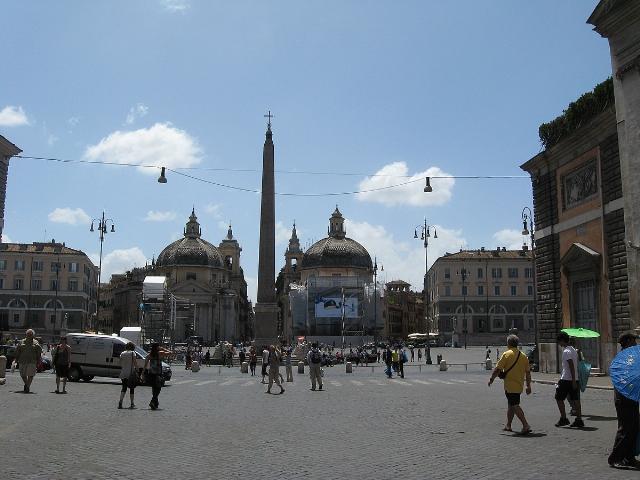
Image: Roman Suzuki
FOLLOW US ON


