


 Print
PrintConstitutional talk and actions
Politics is “full of sound and fury, signifying nothing.” Constitutional government, though, is designed to be full of sound and fury, securing freedom. Officials are to promote the general welfare by severely limiting themselves and other officials.
At the time the proposed Constitution was up for ratification, the American people had for a long time lived singularly free and had grown considerably more prosperous than the English people. The Americans were determined to keep this good thing going by continuing to severely limit governments. And unless people supported the proposed Constitution, their representatives wouldn’t ratify it.
To gain people’s support, the Federalists of the constitutional convention had already proposed to separate and offset powers. Each separated part of the government created using the Constitution would be given strong power and the duty to severely limit itself and others. Each power’s tasks would be simple and intuitive.
But even that explicit limiting wasn’t enough to satisfy the people. Representing the people’s rational distrust of governments, the so-called Anti-Federalists pushed the Federalists of the ratifying conventions also to make a gentlemen’s agreement to draft and ratify a bill of rights that would explicitly provide added protections.
Most of the talk and actions nowadays are Progressives’ distortions or fabrications. Very little of the talk and actions are what the Constitution requires. Even though we know this intuitively, it’s eye-opening to see what talk and actions the Constitution requires laid out in black and white.
Summarized below is a substantial fraction of the talk and actions that the Constitution requires. Notice that the Constitution requires very little talk but lots of simple actions.
Oaths
Officials other than presidents swear or affirm to support the Constitution. Presidents swear or affirm to protect the Constitution.
Processes
Congressmen keep house journals. Congressmen meet at least once a year. Presidents may convene both houses or either house.
Vice presidents preside over senates. A simple majority of congressmen can do business. A small number of congressmen may compel absent members to attend and penalize absence. Congressmen determine house rules. Congressmen judge their house members’ elections, returns, and qualifications.
Congressmen admit new states. Congressmen plus state legislators separate parts of states, or join parts of states or whole states.
Senators advise on appointments, presidents nominate candidates, and senators consent.
Congressmen make exceptions and regulations to supreme courts’ appellate jurisdiction. Congressmen constitute inferior courts.
Congressmen must pass a single total appropriation that limits the overall takings from people. Presidents must then allocate line items to best enforce the whole body of rules and sanctions.
Presidents recommend that congressmen consider necessary and expedient measures. Congressmen pass bills. Presidents sign bills, return them to the originating house with objections, or hold them for ten days (not counting Sundays), and by doing so in effect sign them if congressmen stay in session or veto them if congressmen adjourn.
Senators advise on and consent to treaties, nowadays essentially passing this external law. Presidents make treaties, nowadays essentially signing this external law.
Presidents, who collect revenues and spend the appropriation, from time to time publish a regular statement and account of receipts and expenditures. Presidents from time to time give congressmen information on the state of the national government.
Congressmen punish members for disorderly behavior, and expel members. In impeachments of any congressmen or executive or judicial officers, house congressmen indict and senators try, convict, and punish. In impeachment trials of presidents, chief justices preside over senators.
House congressmen and senators each can’t adjourn their houses for more than three days without the other house’s consent. When they disagree about adjourning, the president can adjourn both houses until the time he sets.
Scope
All officials independently interpret constitutionality and use their powers accordingly.
Congressmen pass rules and associated sanctions that together constitute laws — including criminal laws, civil laws, republican-form-of-government laws, invasion protection laws, domestic violence protection laws, territory rules and regulations, district laws, military laws including rules-of-engagement cards, and war declarations. Senators pass treaties. On all this law, presidents sign or object.
Presidents execute constitutional laws. Part of this job is to take chief command of the national army and navy and the state militias.
Judges opine on cases and controversies between specific parties.
Lessons
So then the Constitution, in this one lesson so far, consists of oaths, processes, and scope.
Above all, officials each independently must do what’s right.
Report by keeping journals, recommending measures, publishing receipts and expenditures, and reporting the state of the national government. Don’t report the state of the nation.
Act by passing rules and sanctions, executing constitutional laws, and opining on cases. Don’t do oversight or constituent service.
This parchment barrier is not self-enforcing; enforcement flows from the people’s actions. The highest priorities are the following actions:
- Tell state officials to formally outlaw and punish specific national-government tyrannies, and to enforce the resulting state statutes against the national government.
- Tell congressmen to use their votes to, in effect, veto all unconstitutional government funding and statutes.
- Tell vice presidents to preside over senates. Tell vice presidents and senators to eliminate unconstitutional filibuster/cloture and immediately start severely limiting governments.
- Tell congressmen to stop grabbing executive power by allocating budget line-items and to instead just pass a lower overall-total appropriation. Tell congressmen to spend the vast majority of their time formally repealing unconstitutional statutes.
- Tell presidents to close unconstitutional departments, agencies, divisions or sections, and government-chartered organizations.
- Tell judges to secure life, liberty, and property.
- Every election, vote against every Republican Progressive. Vote only for constitutionalists, and let the chips fall as they may. Do your part to keep Progressives from returning as hard-to-defeat incumbents, to incentivize constitutionalists to run in future elections, and to demand that other officials use their offsetting powers to limit governments in the meantime.
We need to elect enough officials who are full of sound and fury, severely limiting other officials. We are the people we have been waiting for. Freedom is calling us.
James Anthony is a chemical engineer and the author of The Constitution Needs a Good Party and rConstitution Papers. For more information, see jamesanthony.us.
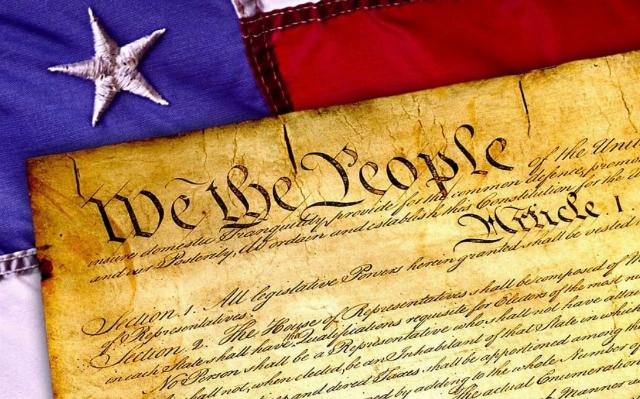
Image via Pxfuel.
FOLLOW US ON


