


 Print
PrintBook burning: From antiquity to the modern era
The Library of Alexandria, one of antiquity’s greatest repositories of knowledge (holding up to 700,000 scrolls), was repeatedly damaged or destroyed between the 3rd century BC and 7th century AD—through wars, accidents, and deliberate acts like Julius Caesar’s 48 BC siege fire or the alleged 642 AD burning under Caliph Omar. These weren’t mere casualties; they symbolized the victors’ intent to obliterate rival philosophies, sciences, and histories, ensuring dominance by starving future generations of alternative viewpoints.
During the Spanish Inquisition (1478–1834), the Catholic Church systematically burned Jewish, Muslim, and heretical texts to enforce doctrinal purity. In 1499, Archbishop Cisneros ordered the incineration of thousands of Arabic manuscripts in Granada, and by 1500, over 1 million volumes (including Talmudic works) were torched across Spain. This wasn’t random; it was a calculated effort to erase “dangerous” ideas, forcing conversions and cultural amnesia on minorities.
Mao’s Cultural Revolution (1966–1976) took this to genocidal scale: Red Guards, under Mao’s directive to destroy the “Four Olds” (old customs, culture, habits, ideas), burned millions of books, including Confucian classics, Western literature, and even communist texts deemed insufficiently revolutionary. Libraries were ransacked, intellectuals persecuted, and history rewritten to glorify Maoism, resulting in the loss of centuries of Chinese heritage and the deaths of up to 2 million people.
In each case, burning was performative gaslighting: a public ritual declaring “this knowledge never mattered” or “this truth is a lie,” destabilizing collective memory and enforcing ideological conformity.
Modern Equivalents: Digital Bleaching and Psychological Manipulation
BleachBit, an open-source tool for securely deleting files, gained infamy during the 2016 Hillary Clinton email controversy. Clinton’s IT team used it to wipe her private server after subpoenaed emails were identified, rendering data unrecoverable (“even God can't read them,” as Trey Gowdy reportedly quipped). This digital “burning” erased potential evidence of mishandled classified information, mirroring historical purges by destroying records that could challenge official narratives. Here is the raw admission: In 2015, while testifying before Congress about 33,000 missing emails, Hillary Clinton was asked how an entire private server could be wiped clean.
Speaking to reporters, of course smirking: “What, like with a cloth or something?”
Gaslighting in today’s politics and media—coined from the 1944 film where a husband manipulates his wife into doubting her sanity—operates similarly but psychologically. Politicians and outlets distort facts to make audiences question reality: denying election results, reframing economic hardships as “transitory,” or scrubbing social media posts to alter timelines. Examples include Trump’s “alternative facts” or media retractions buried in fine print, creating confusion akin to Inquisition edicts declaring heretical books “never existed.”
Resemblances: Control Through Erasure and Doubt
Both eras weaponize destruction to monopolize truth. Historical burnings were overt power displays, eliminating physical artifacts to prevent dissent—Alexandria’s loss halted scientific progress for centuries; the Inquisition stifled Renaissance pluralism; Mao’s revolution brainwashed a generation into ideological purity. Modern equivalents are stealthier: BleachBit enabled “plausible deniability” (e.g., “accidental deletion”), while gaslighting erodes trust without flames—social media algorithms “shadowban” content, AI rewrites history in real-time, and “journalism” is built upon Orwell’s “Memory Hole.”
The core resemblance is psychological warfare: burnings instilled fear and conformity; today’s tactics foster self-doubt and apathy, fragmenting society into echo chambers. In an age of infinite data, “erasure” isn’t total destruction but selective invisibility—gaslighting convinces you the “book” was never there, or if it were, it was always “misinformation.” This digital Inquisition sustains power by making truth subjective, echoing Mao’s revolution where “old ideas” were burned to birth a “new China.” Ultimately, both suppress collective memory, ensuring the powerful dictate reality.
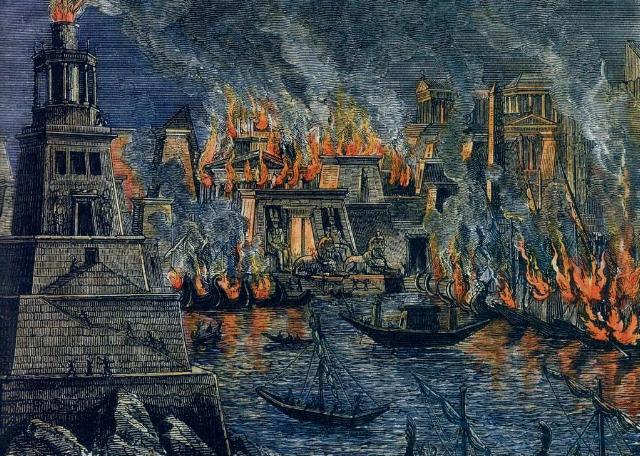
Image: Public domain.
FOLLOW US ON


