


 Print
PrintA man should ‘just live!’
Dr. Zhivago, Carlo Ponti’s epic film of a Russian poet and his Lara, premiered 60 years ago this month. Starring Omar Shariff, the movie debuted December 22 in New York and opened across the rest of the United States December 31. The movie is more than a love story. It is a meditation on the fate of the soul in an age of ideology.
The film focuses on a man in the middle of the Russian Revolution and Civil War. His day job is physician, but his real love is poetry. His poetry is banned as sentimental and personal.
Orphaned early, Zhivago is adopted by a wealthy Moscow family whose daughter he marries. Their fortunes are reversed by the Revolution; their class affiliations make them suspect. Their home expropriated, they travel to an old estate, Varykino, that they held in the Urals. Arriving there, they find that that home has been nationalized, too. They settle into the gardener’s cottage.
Their trip to Varykino is arduous. They travel almost two weeks in overcrowded cattle cars, filled with Russians fleeing the typhus-ridden, starving socialist paradise of Moscow. During a train stop en route, Zhivago is seized and brought before Strelnikov, a fanatical Marxist, the local Stalin who has terrorized the region, burning villages and killing people.
Zhivago had met Strelnikov six years earlier, in Moscow. Then he was a radicalized student, Pavel Antipov, who rescued his fiancée, Lara, from arrest after she shot the lecher Komorovsky, who had raped her. All their paths and Zhivago’s crisscross throughout the film.
Zhivago’s encounter with Strelnikov aboard the latter’s military train is eerily relevant in today’s America. Six decades after the film’s release, a socialist is about to become mayor of New York City, with no small number of Americans still into cancel culture, and in the year of Charlie Kirk’s murder, violence for political ends is alive and well.
After Strelnikov concludes that Zhivago is not a White Partisan assassin — the Whites were the opponents of the communist Bolsheviks, then locked in a bloody civil war — a conversation ensues. Strelnikov asks Zhivago if he was “the poet,” admitting he once admired his writings but no longer does. “Feelings, insights, affections, it’s suddenly trivial now.” What matters is politics. Everything is political. He asks Zhivago if he agrees and concludes that he doesn’t. Strelnikov explains why: “The personal life is dead in Russia. History has killed it.” True to Marxist ideology, life is just one big canvas on which individuals act out the grand designs of “history” leading toward “progress.” And “progress” is revolution.
Strelnikov is an ideologue, but he is not stupid. He recognizes that Marxist ideology, especially as incarnated in everyday acts in “history,” might cause pushback. “I can see how you might hate me.” Class conflict, pitting one group against another—workers versus owners, kulaks versus tenant farmers, the “rich” versus the rest, those
“1-percenters” who “don’t pay their fair share of taxes” versus everybody else — is the gasoline in history’s internal combustion engine. It’s necessary. Societies are built not on love, but on hatred, envy, and strife.
Zhivago demurs. “I hate everything you say but not enough to kill you for it.” The conversation then steers into the past, with the paranoid Strelnikov convinced that Zhivago recognized him. Zhivago admits that their paths crossed at the shooting mentioned above, adding that his “wife” — Lara — can vouch for him, as he and she served on the Ukrainian Front in World War I.
“Why do you call her my wife?” asks Strelnikov. He confesses he has not seen her “since the War,” though he knows just where she is: a city under shellfire. “The private life is dead for a man with any manhood.”
Zhivago retorts, saying, “We saw a sample of your manhood” in a village burned for allegedly selling horses to the Whites. Zhivago claims that the claim was wrong and that the wrong village was burned. In the best Pontius Pilate (“what is truth?”) fashion, Strelnikov dismisses it: “They always say that, and what does it matter? A village betrays us, a village is burned. The point’s made.”
“Your point, their village,” answers Zhivago, which abruptly ends the conversation. As Zhivago leaves, Strelnikov asks, “And what will you do with your wife and child in Varykino?” “Just live!” is Zhivago’s terse response.
The distortion of modern American life comes from the Marxist-inspired notion that everything is political. Nothing is as it seems. Even a raised eyebrow can be a microaggression rather than a nervous twitch. And even if one denies one’s supposedly “unconscious biases” behind it, the privileged always say that, and what does it matter?
In the socialist world of perennial class conflict, there’s no room to “just live.” Life itself is a political act, and politics can be wrong.
Dr. Zhivago is a study in the politicization of life. Things might have been better — for Strelnikov and lots of other people — if he had lived a normal life in Moscow with Lara. He might not have become a murderous paranoiac. She might not have been cast on to the fortunes of whatever pair of pants could protect her in the moment. In the end, Lara has to flee with Komorovsky because Strelnikov has been purged, and now Lara’s “served her purpose” — bait to capture her estranged husband. “These men who came with me [Komorovsky] today as an escort will come for her and the child tomorrow as a firing squad.” And even though they momentarily escape, Lara’s unborn baby, Tonya, will be lost in the middle of fighting in the Mongolian Communist Civil War. The consequences of politicization ramify across the generations.
A polarized America in which increasing numbers of naïve people succumb to the cancel culture of socialist class conflict would do well to learn from history where such ideas lead...and to disabuse themselves of the hubris that, somehow, they can follow those paths while evading that fate.
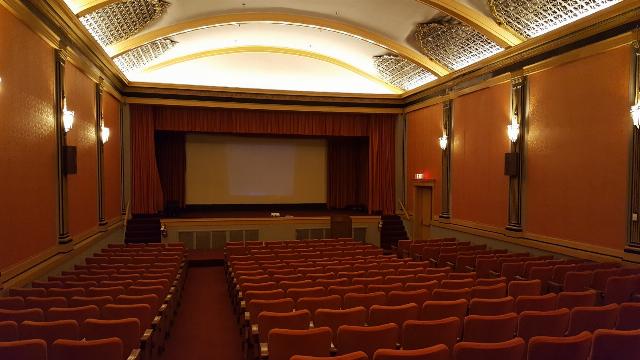
Image: LIDayo via Wikimedia Commons, CC BY-SA 4.0.
FOLLOW US ON


