


 Print
PrintWhat President Trump is going to Budapest for
I am continuing to prepare for President Donald Trump’s trip to Budapest, where he will meet with President Putin. In order to negotiate an end to the war with Ukraine, it is necessary to know for what Putin sent his soldiers there. To clarify, I am not asking “why,” but “what for.” Since the beginning of Putin’s attack on Ukraine, political scientists, psychologists, and other experts have attempted to explain the attack based on Putin’s psyche: his desire to prove to world leaders that he is the most powerful, his dream of being remembered as the “gatherer of Russian lands,” his irritation at Ukraine’s application to join NATO, and the fabrications of Russian propagandists about American biological laboratories in Ukraine.
However, on September 5, 2022, Major General Vladimir Ovchinsky, former head of Russian Interpol and current advisor to the Minister of Internal Affairs of the Russian Federation, revealed the secret. In the September issue of the magazine Izbor Club, he published his article Литий и смерть (Lithium and Death). This small-circulation magazine certainly wasn’t read in the White House, and I doubt anyone there knew how to read Russian, then or now. However, I will not translate and quote the entire article. Instead, I will list the reasons for the Russian invasion mentioned in it, starting with this:
‘Ukraine ranks fourth in the world in terms of the total estimated value of its natural resources. It has an annual output of approximately $15 billion, with a potential estimated value of up to $7.5 trillion,’ the general wrote. ‘At the same time, Ukraine is one of the richest European countries in terms of rare earth metals and lithium reserves. The value of these deposits is estimated to be between $3 trillion and $11.5 trillion. Oil is traditionally called ‘black gold’ because of its importance, and according to global experts, lithium is becoming the ‘white gold’ of this century. In nuclear energy and atomic technology, lithium is used to obtain a radioactive isotope of hydrogen called tritium. Most of the lithium is used in the production of lithium-ion batteries. In Ukraine, the reserves of lithium ore in the Donetsk region alone amount to 5.67 million tons in category C1 and more than 8 million tons in category C2. The projected volume of lithium reserves in Russia is one million tons.’
Bingo! As one of my friends said, “Now you’ve revealed yourself!” Russia’s projected lithium reserves are only one million tons, while Ukraine’s reserves in the Donetsk region alone are over thirteen million tons. Do you now understand why Putin’s troops invaded Ukraine and why he clung to Donetsk? Why did he so stubbornly refuse to call this invasion a war until September, 2022? He referred to it as a “special operation” instead. Because it was conceived as a special operation to urgently seize Ukrainian lithium.
Don’t believe it? Allow me to quote General Ovchinsky again:
At the end of 2021, Ukraine began auctioning off permits to explore its lithium, copper, cobalt, and nickel reserves. In November of that year, the Australian company European Lithium announced that it was acquiring rights to two promising lithium deposits, one in the Donetsk region in eastern Ukraine and the other in Kirovograd in the center of the country. In the same month, the Chinese company Chengxin Lithium applied for rights to lithium deposits in Donetsk and Kirovograd. According to Rosenblum’s office (Assistant Secretary of Defense for International Security and Defense Policy), the Pentagon is focusing on Ukraine’s mineral resources. In mid-February 2022, seventeen American military experts wrote a letter to U.S. Secretary of Defense Lloyd Austin emphasizing the need to expand U.S. access to these mineral resources.
Understand? After Australia and China applied for the right to develop Ukrainian lithium in the fall of 2021, Putin began gathering troops along the Ukrainian border. As soon as American experts started talking about “the need for US access to these minerals,” Putin gave the order to invade. Although Ukraine had refused NATO membership, it no longer mattered. It wasn’t the destruction of mythical NATO bases that Putin and his company wanted, but the coveted Ukrainian lithium. “The stakes are extremely high,” wrote Ovchinsky in his article. “Global lithium consumption will reach at least 200,000 tons by 2025. By 2050, Europe’s demand for rare earth elements will have increased tenfold!”
The true reason for Putin’s invasion of Ukraine is its rare earth and lithium deposits, which are worth $11.5 trillion. However, it turns out that Ukraine values its territory more highly, but this never occurred to Putin’s commission. Otherwise, taking this lithium consumption under concession would have been far more profitable than his entire “special operation.” But a concession must be paid for in foreign currency, while seizing it requires the only blood of Russian soldiers.
Now, let’s return to the psychology of the Russian president. Note the difference in approach: while Australia and China waited for a response to their requests, and American experts suggested their minister consider access to Ukrainian natural resources, Putin made an “impossible offer” with his tank blitzkrieg aimed at the Ukrainian capital. There’s no point in “wind snots around one’s fist,” as he puts it. If Europe abandons its addiction to Russian oil in a couple of years, it urgently needs to make her a lithium noose.
P.S. On April 30, 2025, the United States and Ukraine signed an agreement establishing the U.S.-Ukraine Investment Fund. This fund would grant the United States access to Ukrainian assets in exchange for future military aid. Thus, Putin’s “special operation” to seize Ukrainian lithium resulted in at least part of it (the Kirovohrad deposit) going to the U.S.-Ukraine Fund. However, I seriously doubt that Putin will be handing Trump the captured Donetsk’s lithium in Budapest, with its 5.67 million tons of C1 lithium and over 8 million tons of C2 lithium.
Edward Topol is the author of international bestsellers Red Square, Red Snow, Submarine U-137 and others.
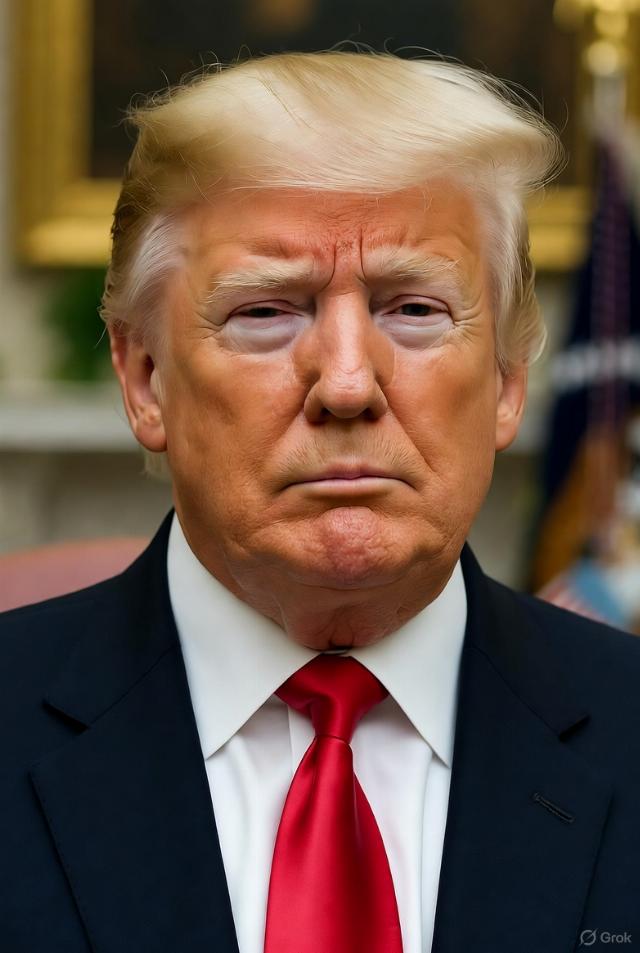
Image from Grok.
FOLLOW US ON


