


 Print
PrintThe first time I heard President Kennedy's voice
By October 1962, Castro had already declared himself a Marxist-Leninist, something he’d denied before on "Meet the Press." As my father used to say, the mask is off, and we all got fooled.
My younger brother and I used to play sandlot baseball and saw a lot of anti-aircraft guns getting set up. I told my parents, and they weren't surprised that an invasion of the island was possible. One of my favorite childhood memories is hitting a ball that landed between the anti-aircraft guns. The soldier threw it back, and the game went on. We scored it as an automatic double.
On this day in 1962, we sat around my father's Phillips radio, the one with a shortwave band. It was a beauty of a radio with something called “FM,” or a new way of listening to music, as my father said.
By the way, this radio was a lifeline to international news, and I fell in love with short-wave radios. I still have one. I told my sons that it was listening to the world before you did it on your iPhone. They were pretty impressed with that. My father purchased it because it was one of the first FM models to be available in Cuba. However, it was the short-wave band that became the radio's primary feature and literally kept us connected to the world.
Our place was very close to "El Malecon," the legendary Havana ocean drive avenue. It was a popular place for couples to meet and check out that romantic Havana Moon.
And then I heard a U.S. president on the radio for the first time. I had seen his photos in Cuban magazines but had never heard his voice.
We heard President Kennedy (with a Spanish translator) say that there were missiles in Cuba:
Good evening, my fellow citizens:
This Government, as promised, has maintained the closest surveillance of the Soviet military buildup on the island of Cuba. Within the past week, unmistakable evidence has established the fact that a series of offensive missile sites is now in preparation on that imprisoned island. The purpose of these bases can be none other than to provide a nuclear strike capability against the Western Hemisphere.
Upon receiving the first preliminary hard information of this nature last Tuesday morning at 9 A.M., I directed that our surveillance be stepped up. And having now confirmed and completed our evaluation of the evidence and our decision on a course of action, this Government feels obliged to report this new crisis to you in fullest detail.
The characteristic[s] of these new missile sites indicate two distinct types of installations. Several of them include medium range ballistic missiles capable of carrying a nuclear warhead for a distance of more than 1,000 nautical miles. Each of these missiles, in short, is capable of striking Washington, D. C., the Panama Canal, Cape Canaveral, Mexico City, or any other city in the southeastern part of the United States, in Central America, or in the Caribbean area.
"Damn," said my mother in Spanish. "I guess we'll be the first ones to get blown up," or something like that. I have to admit that it was a hilarious line, and it broke up some of the tension.
Well, the world went through a rough couple of weeks, and the USSR removed the missiles.
Looking back, I have a couple of questions.
First, why didn't President Kennedy tell the Soviets to take Castro out with the missiles? My guess is that the Soviets would have asked: Do we take him out dead or alive? The Soviets were overextended in October 1962. The U.S. held all the cards and should have demanded Castro's exit.
Second, why don't we ever talk about the impact on the people of Cuba? The Missile Crisis was followed by more and more repression, brutality against the guerrillas in Escambray, and the consolidation of the Castro dictatorship.
The missiles eventually left, but the communists stayed behind and were worse than ever.
P.S. Check out my blog for posts, podcasts and videos.
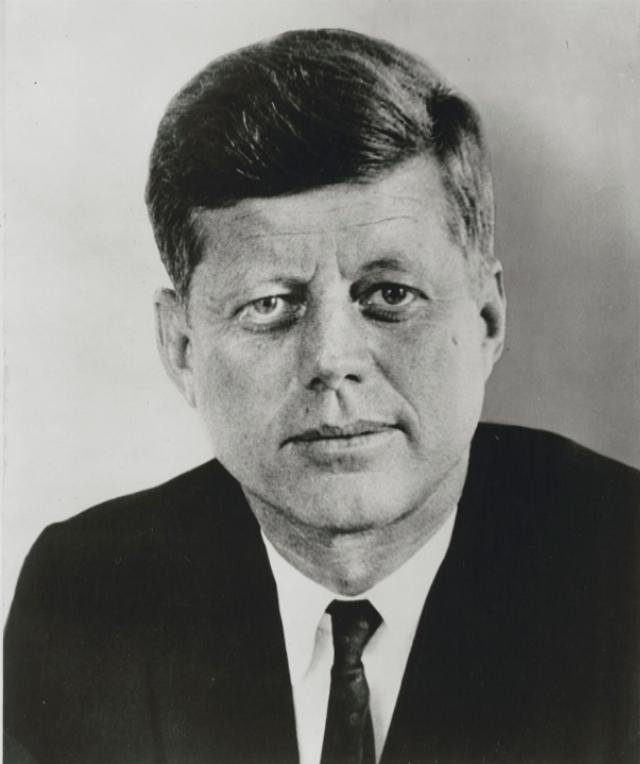
Image: Library of Congress
FOLLOW US ON


