



 Print
PrintOhio bill to make energy affordable, reliable, and clean
The affordability crisis in America is real. From health care to education to energy, government actions, well-intentioned or not, have skewed market forces and upended the natural law of supply and demand.
In the energy sector, the federal government’s years-long quest for an unnecessary transition to so-called "green energy" has resulted in higher electricity costs, decreased grid reliability, and, ironically, environmental degradation.
Fortunately, some states are pushing back with commonsense legislation intended to solve these specifically manmade problems. Earlier this year, Louisiana passed landmark legislation appropriately named the Affordable, Reliable, Clean Energy Security Act into law.
According to Louisiana governor Jeff Landry, “This bill is important because it is the first in the country… we’re going to protect and make sure that policy is enacted into law to ensure our electricity is affordable, reliable, and clean energy security for our state.”
If imitation is the sincerest form of flattery, Landry and Louisiana lawmakers should be pleased to know that Ohio lawmakers are following their precedent-setting law.
Last week, the Ohio Senate introduced a bill that is strikingly similar to Louisiana’s law.
First, the Ohio bill would require that “affordable energy sources” be limited to those that have “a stable and predictable cost,” provide “a cost-effective means of heating, cooling, and generating electricity” and deliver “substantial savings related to residential and commercial customers comparable to energy sources listed in 42 U.S.C. 15852(b), based on the average cost per unit of energy output calculated to include any direct or indirect payment by any level of government for the previous five years.”
In layman’s terms, this means that Ohio would rely primarily on actually affordable energy sources, such as natural gas and coal, rather than highly subsidized and unaffordable solar and wind power.
Second, the Ohio bill would require that “reliable energy sources” be “readily available at all times to meet energy demands with minimal interruptions during high-usage periods.” Furthermore, reliable energy sources would be limited to those with “a minimum capacity factor” of 50 percent, “dispatchable at all times and with the capability to ramp up or down electricity generation within one hour to stabilize the electrical grid,” and “the ability to complement and provide backup to renewable energy resources during periods of low availability.”
Again, this would result in Ohio shunning unreliable, intermittent solar and wind in place of dependable energy sources that provide a constant stream of baseload power. Currently, the only energy sources capable of providing a steady flow of power are natural gas, nuclear, and coal. Since the wind doesn’t always blow and the sun doesn’t always shine, wind and solar are inherently incapable of providing steady baseload power, especially during times of peak use.
Third, the Ohio bill would address the subject of clean energy by ensuring that “Clean energy source” includes “energy generated by nuclear reaction” and “energy generated using natural gas.” For far too long, environmental zealots who are hellbent on the forced transition to solar and wind have excluded natural gas and/or nuclear power from being considered “clean.”
Fourth, the Ohio bill would protect “infrastructure security” by minimizing “reliance on foreign nations for critical materials” that are necessary to manufacture renewable energy components. Moreover, the bill would prevent “foreign adversary nations” like China from supplying shoddy green energy components to Ohio’s energy infrastructure.
All things considered, the Ohio legislation would be a boon for Ohio households and businesses. By emphasizing the need for affordable, reliable, and clean energy, Ohio lawmakers are looking to the future, not the past.
Despite generous government subsidies and mandates, wind and solar are still not even close to being affordable or reliable. What’s more, the notion that wind and solar are cleaner and better for the environment than conventional energy sources is a myth that has been thoroughly debunked.
With electricity demand expected to surge in the years ahead as AI and data centers consume colossal amounts of energy, it seems like a no-brainer that Ohio lawmakers would do everything they can to ensure that Ohioans have unfettered access to affordable, reliable, and clean energy.
A long time ago, Supreme Court Justice Louis Brandeis described the states as the laboratories of democracy. By this, he meant that states could perform policy experiments at a small scale without the perils and pitfalls of a one-size-fits-all national approach. When it comes to energy, federalism allows states to tinker with policies tailored to their particular circumstances.
As Louisiana and Ohio move forward with their versions of affordable, reliable, and clean energy policies, it would behoove state legislatures to take notice. After all, imitating success is not a bad thing; it’s smart.
Chris Talgo (ctalgo@heartland.org) is editorial director at The Heartland Institute.
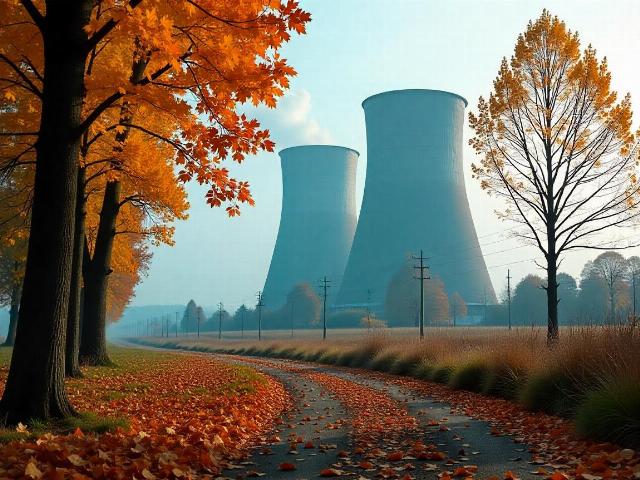
Image: Freepik
FOLLOW US ON


