



 Print
PrintTime to Slaughter Humphrey’s Executor
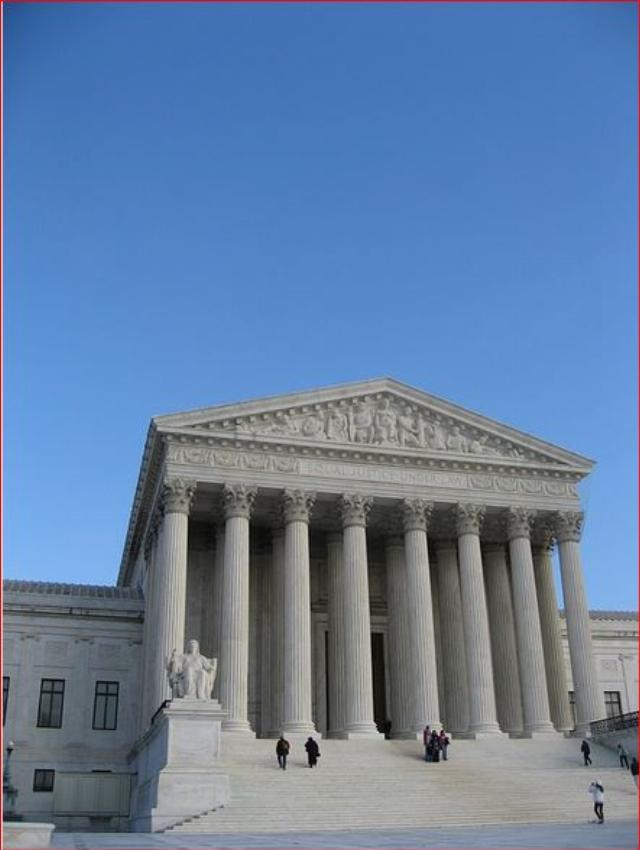
Louise Slaughter was a Democrat commissioner on the Federal Trade Commission (FTC). President Trump fired her. She sued, claiming the President violated a 1914 federal law that bars the President from firing commissioners except for cause of the most egregious reasons. President Trump insisted that there is one executive branch, of which the President is head, and so Congress cannot tie the Chief Executive’s hands as to who serves in the executive branch. That case is being heard in the Supreme Court today.
Slaughter is relying on a 90-year-old precedent, Humphrey’s Executor v. United States. William Humphrey was appointed to the FTC by President Hoover. FDR fired him. Humphrey -- like Slaughter -- contended his firing was illegal. When he died, his estate sued for what it considered back pay due him. In 1935, the Supreme Court upheld his claim.
Slaughter should lose. The President should win.
Why? Let’s go back to basic civics. How many branches of the federal government are there? Three: the Legislative, Executive, and Judicial.
There is no fourth branch: the Bureaucratic. There is especially no fourth Bureaucratic branch that, once installed in office, has free rein to impose policies on the American people and be fundamentally answerable to nobody.
Democrat Woodrow Wilson created the FTC in 1914, along with a plethora of other federal and “independent” entities -- the most nefarious being the Federal Reserve -- because he and the “Progressives” (their own name) of his day fundamentally did not believe Americans should govern themselves by the normal give-and-take of politics. Princetonian Wilson instead believed that “experts” should make those decisions. The rough-and-tumble of politics was distasteful to these self-anointed tribunes of Americans: political decisions should not be made, well, “politically” but by technocrats applying dispassionate “reason” and “expertise.” Amazingly, that “reason” and “expertise” frequently mirrored Progressives’ thinking.
 The FTC does a lot of things that directly impact your life. They’ve made policies on things as diverse as drug prices, “junk fees” on credit cards, funeral home practices, and big tech. Unlike the President, you never voted for any of the five people making those decisions. Unlike the President, they never had to articulate their policy preferences to win your vote. Unlike the President, they affect your life but don’t account to you. That’s wrong. It’s even unconstitutional.
But, you say, there’s a Supreme Court decision that says the opposite. Okay -- which means the Supreme Court was wrong 90 years ago and should be overturned (the Administration’s position). Not the first time that’s happened. The Supreme Court once said racial segregation was okay, then took more than half a century to fix that. It’s better they do, given historical precedent. They also once said black people weren’t human beings but property. It took a four-year Civil War to fix that.
Humphrey’s Executor reads like a decision looking for excuses to uphold FDR. The core of its argument is because the FTC makes some policies like Congress does, it straddles the legislative/executive/judicial branch divide and so needs some insulation from the President’s direct hand.
Why was the Supreme Court wrong? Because the Founding Fathers intended there to be clear lines of differentiation between the three branches of government. It was part of another thing from Civics 101 -- the checks and balances system. By allocating certain powers to certain branches, Congress prevented the accumulation of power in one place by unaccountable parties -- precisely what the FTC is doing.
The problem is not Trump. The problem is Humphrey’s Executor. Those who deny that have their problem with the Founders’ constitutional philosophy.
If the FTC is doing legislative policymaking in the executive branch, the problem is not the President controlling the branch of which he is head. The problem is Congress giving its job to somebody else instead of doing it itself.
Congress should be addressing the things the FTC routinely has done. They are elected to do that. They should be debating and going on recorded votes on these issues. If they don’t want to, either leave office or give up the pay for a job not done.
If the Senate did what it’s supposed to do, it wouldn’t have time to sit around for an hour droning on an oral roll call vote on whether to have a vote on an issue. (Yes, the Senate votes on voting). The “world’s greatest deliberative body” might return to having deliberations rather than solo soliloquies between one senator and the C-SPAN camera while the captive senator in the chair is compelled to feign interest.
Why would Congress “delegate” its authority. The Progressive excuse was that these issues were too complicated for politics and politicians, so experts had to study them and decide. I don’t buy that.
If the issues are that complicated, then let’s discover just how smart (or not) our representatives are. Or maybe there’s another thing operating here: politicians who don’t want their fingerprints on an issue. Controversial decisions require people to take a stance. By punting such decisions to unelected bureaucrats, representatives have plausible deniability: “I didn’t vote for that.” (I just voted for the people I knew would vote for that).
To the shock of the elites that brand President Trump a threat to the “rule of law” and a “danger to democracy,” the President’s position is the lawful and democratic one. By virtue of election, he runs the Executive Branch. People in that branch should be conducting policies he was elected to advance, not ones they want that nobody voted for. The President ought to be able to control the Executive.
One would have thought this farce of tying Presidential hands ended in 1868, when Congress tried to impeach Andrew Johnson for insisting he could fire a member of his cabinet despite a law saying he couldn’t. That principle should have been settled in 1926, when the Supreme Court -- invoking a postmaster fired by Woodrow Wilson -- ruled that law was unconstitutional. Humphrey’s is not careful jurisprudential distinction: it’s an excuse. It’s time to slaughter it.
Image: Pixabay
FOLLOW US ON


