



 Print
PrintThe Global War You’ve Never Heard Of
American actions involving Venezuela have stirred up a flurry of theories and narratives around the United States’ strategic intentions. Some theories highlight apparent contradictions between rhetoric and policy, such as President Trump’s pardons of major drug-traffickers despite his public anti-drug stance. Others frame potential U.S. military threats against Venezuela as being driven primarily by America’s dependence on oil. Additional narratives have revived allegations of Venezuelan interference in U.S. elections, including claims from a former Maduro regime official about a “narco-terrorist war” against the United States.
In my effort to better understand the factors driving the building tensions around Venezuela, I decided to strip away all the explanations and start with what we know is happening. The United States is striking small vessels, referred to as go-fast boats, reportedly carrying cocaine meant to be transferred onto ships bound for the Gulf of Guinea. This sea route and the next step of the voyage have come to be known as Highway 10 because Venezuela is connected to the Gulf of Guinea via the 10th Parallel North on the globe. The gulf includes several countries that tend to lack the resources necessary to patrol for and prevent the shipments. From there, the payload can be passed on to the even poorer countries of the Sahel desert, where al-Qaeda, the Islamic State, and the Russian mercenaries of the Africa Corps (not to be confused with the German unit of World War Two) have a certain level of autonomy and can move the cocaine to the Mediterranean Sea. From there it enters the hands of Europe’s various iterations of the Mafia. This drug route and the players involved has been laid out in a pretty detailed manner by the Argentine independent journalist Ignacio Montes de Oca under his X handle, @nachomdeo.
With this new information in mind, we can then apply events that we know have happened. At the starting point of Highway 10, you have the United States destroying the go-fast boats before they can liaison with the ships bound for the Gulf of Guinea. In the middle of the drug route you have the countries on the Gulf of Guinea, two of which have had coups in the last two months. The first took place on November 26 in Guinea-Bissau, a key stopping point on Highway 10. The second appears to be a failed coup that took place on December 7 in Benin, another country known to be on the Highway 10 route.
So at the starting point of the route, you have the U.S. striking go-fast boats. In the middle, you have coups. What’s happening at the finish point? Well, in Italy, the Carabinieri are carrying out large-scale operations against the unpronounceable ’Ndrangheta. The ’Ndrangheta happens to be one of the criminal organizations the independent journalist Montes de Oca cites as central to this route. For his part, French president Emmanuel Macron has been leading the call to intensify the fight against organized crime in Europe. France even sent a battleship to the Caribbean.
I have no idea if the strikes on boats, the coups along the Gulf of Guinea, and the crackdown on organized crime in Europe are all coordinated or even connected, but I do know that within a small time frame, a series of events have taken place that make it difficult to be involved in the drug trade at the beginning, middle, and end of Highway 10.
So how do you condense all of this into a concept we can discuss without getting lost in tropes about war for oil or American imperialism? Well, the first thing to do is give it a name to make it more manageable. The Highway Ten War feels succinct to me.
Then we can start assessing the why and how of it all. The first reason for the president to prioritize this route at this moment is that the first country in the route is an adversarial geopolitical entity that has given haven to our enemies. Such a presence at such a close range is unacceptable, and with the governing circle of that country accused of comprising a cartel involved in the drug trade, it becomes impossible to separate that threat from Highway 10.
The next geopolitical reality is President Trump’s pledge to take on the persecution of Christians in Nigeria. Although Nigeria isn’t one of the central locations along the drug route, the Islamist groups attacking Christians in Nigeria’s north benefit from the finances and arms resulting from the routes across the Sahel.
There’s also the United States’ alliance with France to consider. Not only have the French expressed concern at organized crime related to the Highway 10 drug route, but they have also seen their interests threatened by Russian expansion into countries along the route. This brings us to Russia and the possibility that targeting this route could help pressure Russia during negotiations with Ukraine.
Because events in Venezuela, Guinea-Bissau, Nigeria, and European organized crime have been treated as separate geopolitical events, rather than one issue connected by the Highway 10 route, certain questions have gone unasked in the public sphere. What level of coordination has gone on behind the scenes between the countries? We know that Russia has interests in Venezuela and the Sahel, but what is the extent of those interests, and how are they connected by the disruption of this route?
Unifying these conflicts under the label of the Highway Ten War can help the public identify the questions that have to be asked in order to create a more complete understanding of the geopolitical map as we discuss American actions in this realm.
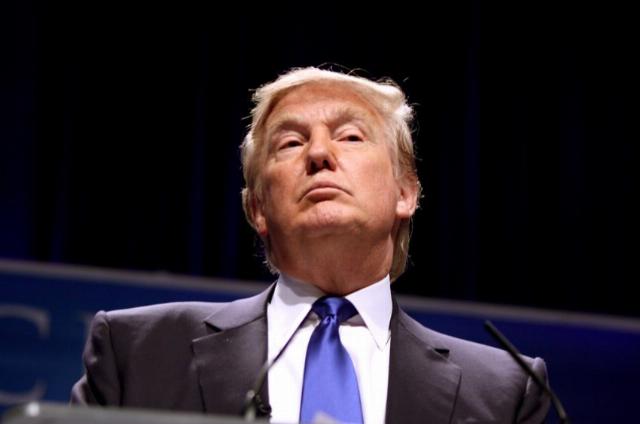
Image: Gage Skidmore via Flickr, CC BY-SA 2.0.
FOLLOW US ON


