


 Print
PrintIdeology and Authority in America
Perhaps the most bizarre aspect of the recent video issued by Elissa Slotkin, in which a chorus of prominent Democrat politicians urge military rank-and-file to commit mass insubordination against their leadership, is its banality. It has become commonplace to witness prominent political and academic leftists openly excusing violence, property destruction, harassment of federal officers, and political assassination. Farther back, we observed the left’s support of legal persecution against its political enemies and witnessed, during the COVID debacle, a complete disregard of constitutional legal procedures and constraints. In light of this background, the active promotion of military rebellion seems like a minor escalation.
And yet, the liberal class was and remains oblivious to the glaring contradiction between its newfound fanaticism and its stated devotion to traditional constitutional governance. Leftists simultaneously promote radical violations of democratic norms, like openly calling for imprisoning political opposition, while proclaiming themselves the defenders of “constitutional democracy.”
Although some of this seeming frenzy of the liberal class doubtless stems from media-driven agitprop, a deeper causal layer underlying this division lies in a distinction between how the left and the right conceive of social authority. Specifically, the left incorporates an ideological conception of social order, whereas the right incorporates a patrimonial understanding.
At the heart of this distinction is that ideologies, liberal or otherwise, present social order as a rational construction. An ideological system is built from a rational elaboration of core axioms, much like a mathematical proof. Liberals view the canon of liberal theory, from Hobbes to John Rawls, as an ironclad “ideological formula” from which to engineer a just society — a “rationally justified” political system.
In contrast, the form of patrimonial authority observed by the right is not rational; it is relational. It is analogous to the authority of a father over his children, derived from natural bonds, filial loyalties, and social traditions. It is inherent in the traditions of the society itself, in its customary institutions — throne and altar, blood and soil — and in the filial and class relations that prevail within it.
The left’s rationalist notion of authority is what underlies the liberal’s otherwise inscrutable conception of constitutional fidelity. Liberals ultimately vest political authority in the “correctness” of liberalism itself. The Constitution’s authority derives from its ratification of liberalism; it functions in itself only to codify and delineate liberal policy goals into a formal legal framework. For the liberal, the Constitution is authoritative by virtue of enacting liberalism into law. Thus, whatever liberals believe at any given moment is not just consistent with the Constitution, but required of it. Not only is it constitutional to allow federal agencies under DHS to function as full-spectrum social media censors; it is unconstitutional to oppose it. When liberals support increasingly flagrant violations of constitutional law in the name of preserving “constitutional democracy,” they are simply advancing this logic to its natural conclusion.
The conservative will often bewail the liberal’s dismissal of the Constitution’s literal text. He observes the liberal treating the text as a blank canvas on which to impose liberal policy positions and claims that this violates some principle of “rule of law.” But in doing this, the conservative merely begs the question regarding the nature and justification of legal authority.
In the absence of some foundational theory of social authority per se, “rule of law” is meaningless. A law holding that everyone whose last name begins with the letter D must do ten somersaults every other Tuesday would universally be recognized as bearing no rightful authority. The dispute between the left and right regarding per se social authority — the division between rational and patrimonial conceptions of authority — elicits two different perspectives of what “rule of law” means.
Hence, when the rightist invokes the plain text of the Constitution as being authoritative, he is tacitly invoking a particular patrimonial conception of legal authority. He is presupposing that Constitutional authority ultimately derives from the Constitution’s status as a touchstone of the country’s political and legal order. The social order of the American nation was built in part on this text, he insists; therefore, the text should be understood as binding and sacrosanct.
For the left, however, this last statement is a non sequitur, because the left rejects patrimonial conceptions of social authority. The Constitution’s central position at the foundation of the American social order does not afford it any privilege whatsoever. Authority is not relational — it is not based on the heritage or traditions of any nation — it is rational. The words of James Madison might as well have been written by a random — highly precocious — five-year-old. To the extent his literal words reflect liberal ideology — the one rational ideology — one should congratulate our young prodigy on his considerable talents. To the extent that they don’t, they can simply be discarded or interpreted away.
This duality has beset the republic since its founding. United States is very much a manifestation of Enlightenment rationalism, in that it is a nation founded as a conscious historical project, established by a Constitution that was very much a product of rational deliberation, with an expressed commitment to liberal ideals. Yet, until very recently, no American would have claimed that liberal ideals formed the sole basis of the American identity or experience. It was universally understood that the classical Enlightenment ideals heralded at the nation’s founding represented the aspirational vision of a particular people with its own history, character, customs, and folkways.
It is only with the arrival of the New Left in the 1960s that a post-national, completely ideological notion of American liberalism — one devoid of any cultural reference, animated by purely abstract, ideological matters — begins to amass any sort of political constituency. Although there are many factors that gave rise to this, one primary cause is the emergence of mass education, both as a universal cultural practice and as a mechanism of elite formation. This produced an over-emphasis on the aspects of the American journey that were written down, debated, and codified. This written tradition, though historically vital, distorts the “educated” public’s understanding of American culture and history because it must, by its nature, attend to those elements of the tradition that were and are novel, innovative, and amenable to rational scrutiny — the elements that lend themselves to being the subject of a mediocre term paper.
“Conservative values,” meanwhile, are naturally expressed and promulgated not by explicit rational argumentation, but through cultural practice, societal habit, and sentimental attachment. Their natural defenders are the clerical classes, the small landowners, and the local elites, all cohorts that have seen their cultural power rapidly decline in postwar America. A society that grants excessive regard to academia will always put those elements on the back foot, as normal people are forced suddenly to produce articulate defenses of what they assumed was natural and unassailable, or face the sneering contempt of the distant functionary who judges their values antiquated and consigns them to perdition at the hands of the “liberal world order.”
These constituencies would do well to internalize the fact that the tidy rationalistic formulas bandied around by functionaries, academics, and ideologues do not inherently lend them any authority. They can congratulate the learned scholar for his pretty dissertation and politely tell him to shove off.
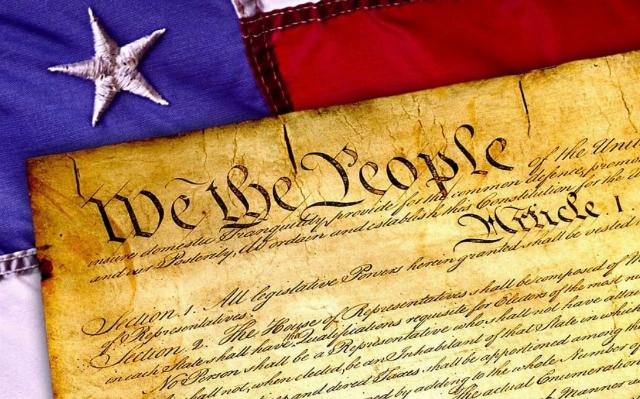
Image via Pxfuel.
FOLLOW US ON


