



 Print
PrintThe Great Democratization: Why Your Pension Deserves Bitcoin
For decades, the investment elite have enjoyed a secret: alternative assets deliver superior returns. While ordinary Americans watched their 401(k)s stagnate in index funds, endowments and sovereign wealth funds quietly reaped gains from private equity, venture capital, and—lately—digital assets. President Trump’s Executive Order 14330, “Democratizing Access to Alternative Assets for 401(k) Investors” (Aug. 7, 2025), finally tears down that wall, giving working Americans the same opportunities long hoarded by the wealthy.
Leveling the Field
The reform works on three levels: federal directive, state legislation, and congressional codification. At the federal level, Trump’s order directed the Department of Labor to lift Biden-era restrictions that effectively banned cryptocurrencies from retirement accounts under the guise of “extreme care.”
States responded swiftly. Arizona, New Hampshire, and Texas legalized modest Bitcoin allocations in early 2025. North Carolina proposed allowing up to five percent of its $127 billion retirement fund—$6.35 billion—to flow into Bitcoin ETFs. Michigan already holds $11.4 million in Bitcoin exposure, and Wisconsin disclosed $164 million in spot ETF holdings.
Florida’s House Bill 183, filed for the 2026 session, is the boldest initiative yet. It would authorize the State CFO to invest up to 10 percent of public funds—including the $218 billion Florida Retirement System Trust Fund—in digital assets. Even a 1 percent allocation would add $2.2 billion to Bitcoin markets; 5 percent would exceed $11 billion. The bill imposes strict custody and compliance requirements, limiting holdings to qualified custodians or SEC-registered ETFs. It cites Trump’s earlier Executive Order 14233 establishing a Strategic Bitcoin Reserve, defining Bitcoin as a store of value and inflation hedge.
In Congress, Rep. Troy Downing’s Retirement Investment Choice Act seeks to codify the reform permanently, shielding it from future reversals. Senate Republicans are pressing for regulatory safe harbors to protect plan sponsors.
Critics decry “speculation,” ignoring that institutions have owned crypto for years. Harvard, Yale, and Stanford invested in digital assets long ago; Michigan and Wisconsin pension funds now follow. The paternalism that deems Harvard’s allocation “prudent” but a Kentucky teacher’s “reckless” is indefensible. Oklahoma lawmakers estimated that a five-percent Bitcoin allocation would have yielded $750 million in just five months—reducing pension liabilities without costing taxpayers.
Macroeconomic Realism
The macro case is simple: the old rules no longer apply. The 60/40 stock-bond portfolio worked when inflation was tame and rates predictable. Since Nixon abandoned gold in 1971, the dollar has lost nearly 90 percent of its purchasing power. Pension funds invested solely in dollar assets are slowly boiling away their value.
Bitcoin offers scarcity and independence from central banks. Its fixed supply of 21 million coins provides what fiat currency cannot—certainty against dilution. While the Fed prints trillions, no government can mint more Bitcoin. For funds managing decades of liabilities, that scarcity is protection.
Since 2015, Bitcoin has appreciated over 15,000 percent. Even accounting for volatility, its risk-adjusted returns beat every traditional asset over ten years. With BlackRock, Fidelity, and other giants now offering Bitcoin products, the real question is why ordinary savers were barred from this asset class for so long.
Monetary Sovereignty and Stability
Cryptocurrency is not rebellion but evolution. The Fed’s monopoly on money creation produced asset bubbles, the 2008 crisis, and inflation that punishes savers. Bitcoin provides a decentralized system where no bureaucracy can rewrite the rules.
For pensions, diversification across uncorrelated assets enhances stability. Bitcoin’s movements have low correlation with equities, particularly during inflation shocks. When the dollar weakens, Bitcoin often rises—the hedge long-term portfolios need. The 2022 “crypto winter,” endlessly cited by skeptics, was followed by a recovery that rewarded patient holders. Pension funds, with multi-decade horizons, are ideally suited to absorb short-term volatility.
Integrating crypto also secures America’s leadership in digital finance. China has its digital yuan; Europe experiments with a digital euro. If U.S. pensions remain confined to 20th-century assets while others advance on blockchain rails, America risks obsolescence. Trump’s order ensures American savers, not foreign innovators, benefit from U.S. financial ingenuity.
The Geopolitical Dimension
The dollar’s supremacy is not eternal. Its strength rests on faith in U.S. institutions and the dollar’s global utility. Endless deficits and monetary expansion corrode both. Bitcoin, a neutral and borderless asset, is becoming a global reserve hedge.
Far from undermining American power, adopting Bitcoin reinforces it. The U.S. still commands the deepest capital markets and most advanced financial infrastructure. Keeping Bitcoin innovation under American jurisdiction ensures it strengthens, not weakens, the national system. Trump’s Strategic Bitcoin Reserve mirrors the role gold once played at Fort Knox: a signal of monetary credibility in the digital age.
Vermont’s proposed ban on pension crypto holdings shows the opposite impulse—fear masquerading as prudence. Dismissing Bitcoin as “too young” recalls those who once said the same about equities or the internet. Pension funds that avoided technology stocks in the 1990s underperformed disastrously; those that shun digital assets now will repeat the mistake.
The Path Forward
Trump’s order does not compel investment; it restores fiduciary discretion. The three-tier system—federal deregulation, state empowerment, congressional codification—forms a durable structure resistant to political shifts.
Florida’s plan exemplifies best practice: a 10 percent ceiling, strict custody rules, ETF channels, and explicit recognition of Bitcoin as an inflation hedge. As Brian Graff of the American Retirement Association notes, “Professional fiduciaries—not the federal government—are best placed to decide what serves participants’ interests.”
Maintaining the status quo is the true recklessness. States like Kentucky and Oklahoma face massive pension shortfalls. With traditional assets underperforming, fiduciaries must seek alternatives. Crypto offers return, diversification, and protection against monetary debasement—the very goals of responsible investment.
Volatility fears are outdated. Institutional adoption and regulatory clarity have stabilized markets, and Bitcoin’s swings have narrowed as liquidity deepens. For pensions with long horizons, near-term fluctuations are noise; long-term appreciation is the signal.
The democratization of alternative assets is overdue justice. For too long, working Americans were excluded from wealth-building strategies reserved for elites. Trump’s reforms end this financial apartheid. Every worker deserves access to the same instruments that enriched universities and sovereign funds.
If pension funds buying Bitcoin seems radical, the real radicalism was denying citizens the chance to protect their savings. In an age of monetary erosion, Bitcoin is not speculation—it is self-defense. Extending that protection to every American is what democratic capitalism should mean.
Fortune favors the brave; poverty rewards the timid.
Bepi Pezzulli is a Solicitor in England & Wales and an Avvocato in Italy. He is a foreign-policy scholar, a member of Advance UK’s College, and a councillor of the Great British PAC. He tweets @bepipezzulli.
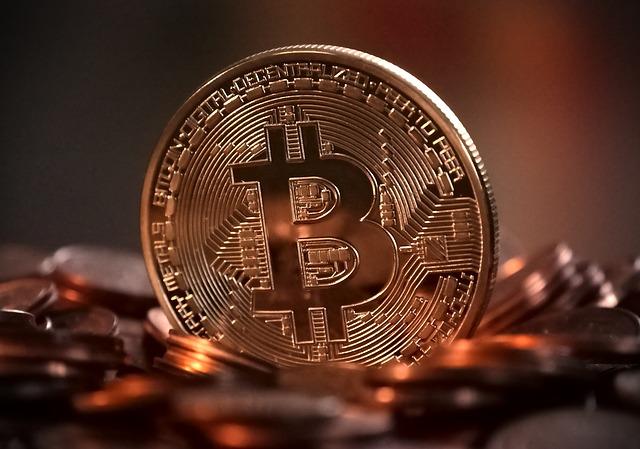
Image: Free image, Pixabay license.
FOLLOW US ON


